
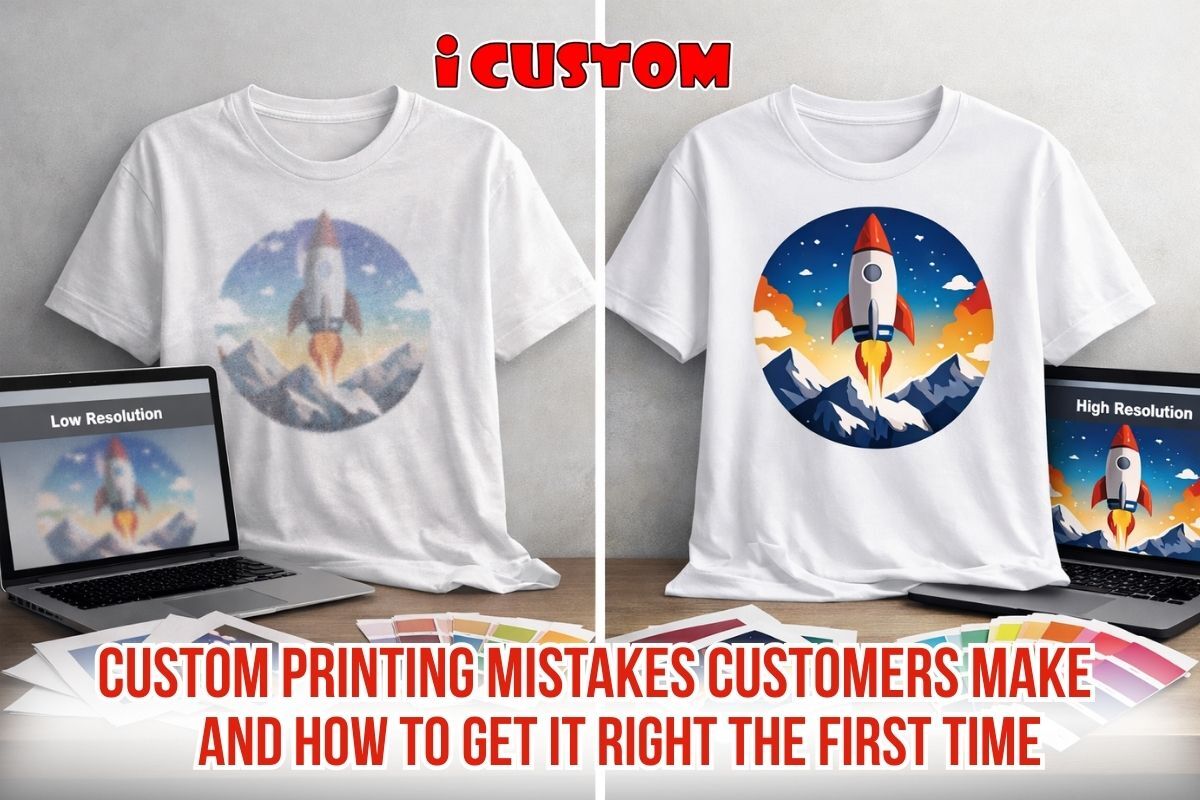
Custom printing has become easier than ever, but that doesn’t mean it’s foolproof. Many customers—first-timers and even repeat buyers—end up disappointed not because printing failed, but because small decisions were made without the right knowledge.
From choosing the wrong fabric to uploading low-quality images, most custom printing mistakes are avoidable. The difference between a product that looks “okay” and one that looks professional often lies in understanding how designs interact with materials, colors, and use cases.
This guide breaks down the most common custom printing mistakes customers make, explains why they happen, and shows how to get it right the first time—whether you’re ordering a single personalized item or placing a bulk order.
Many customers focus entirely on the design and overlook the fabric. To the untrained eye, a t-shirt is a t-shirt—but fabric composition dramatically affects comfort, durability, and print quality.
Designs crack or fade faster
Hoodies feel too heavy or too thin
Prints don’t sit well on the surface
Different fabrics react differently to ink, heat, and washing. A design that looks great on one fabric may appear dull or distorted on another.
Before finalizing custom apparel:
Consider how the item will be used (daily wear, events, gifts)
Choose fabric suited for comfort and longevity
Keep in mind that smooth, stable fabrics hold prints better
Expert platforms like iCustomCA guide customers toward fabric choices that match both design and purpose—preventing disappointment before it happens.
Many people upload images directly from messaging apps or social media, assuming they will print the same way they appear on screens. Unfortunately, screens hide flaws that printing exposes.
Blurry or pixelated prints
Jagged edges on text
Loss of detail on mugs and stickers
This issue is especially noticeable on products viewed up close, like mugs and stickers.
Use high-resolution images (original files whenever possible)
Avoid screenshots and compressed images
Zoom in on previews before finalizing
Good custom printing starts with good source material. Ensuring image clarity saves time, money, and frustration.
What looks good on a bright phone screen doesn’t always translate well to fabric or physical surfaces. Colors interact differently with materials than with light-based displays.
Light designs disappear on light fabrics
Dark designs lose detail on dark apparel
Text becomes unreadable from a distance
This affects everything—from custom t-shirts to hats and stickers.
Ensure strong contrast between design and background
Test readability from a distance
Avoid subtle color combinations unless intentional
Smart contrast ensures your design stands out, whether it’s worn, held, or displayed.
Excitement leads to excess. Customers try to include too many elements—logos, text, graphics—into one design.
Cluttered visuals
Confusing messaging
Reduced aesthetic appeal
Unlike digital screens, apparel needs breathing space. Simplicity often looks more premium.
Focus on one core message or visual
Use negative space intentionally
Scale designs appropriately for the product
Clean designs tend to age better and look more professional—especially on clothing.
Customers often assume placement is automatic. In reality, placement dramatically affects how a design is perceived.
Designs appear too low or too high
Logos look awkwardly sized
Text feels unbalanced
This mistake affects t-shirts, hoodies, hats, and even mugs.
Think about where eyes naturally focus
Adjust size based on product dimensions
Use previews carefully
Proper placement turns an average design into a polished one.
Bulk orders feel urgent. Businesses, events, and teams often skip sampling to save time or cost.
Incorrect sizing
Unexpected color outcomes
Print quality not matching expectations
Fixing bulk mistakes is costly and stressful.
Test a sample whenever possible
Confirm fabric feel, fit, and print quality
Finalize designs only after physical review
Professional custom printing is as much about planning as it is about production.
Customers assume one design works identically across apparel, mugs, stickers, and hats.
Designs too complex for small surfaces
Text unreadable on curved products
Loss of detail on accessories
Each product has unique design requirements.
Simplify designs for smaller items
Adjust layout for curved surfaces
Prioritize clarity over complexity
Adaptation—not duplication—is the key to consistent results.
Designs are often created without thinking about who will use them.
Uncomfortable apparel
Designs that don’t match audience taste
Gifts that feel impersonal
Design with the wearer or recipient in mind
Consider age, environment, and usage
Prioritize comfort and relevance
Custom printing works best when it’s human-centered.
When customers avoid these common errors, the benefits are immediate:
Better-looking products
Longer-lasting prints
Higher satisfaction
Fewer reorders and complaints
More importantly, customers feel confident—not anxious—about their choices.
True custom printing isn’t just about machines and ink. It’s about guidance, experience, and attention to detail.
By educating customers before they order, platforms like iCustomCA move beyond transactional printing and into trusted partnership. This expert-led approach reduces mistakes, increases satisfaction, and builds long-term trust.
Most custom printing problems don’t start in production—they start in planning.
Choosing the right fabric, preparing the right files, understanding color contrast, and testing before bulk orders make the difference between disappointment and delight.
Custom printing should feel exciting, not risky.
When customers are informed, guided, and supported, they don’t just get products—they get results they’re proud to wear, gift, and share.

